DeepBlue’s Crewing Package Gets a Major Overhaul
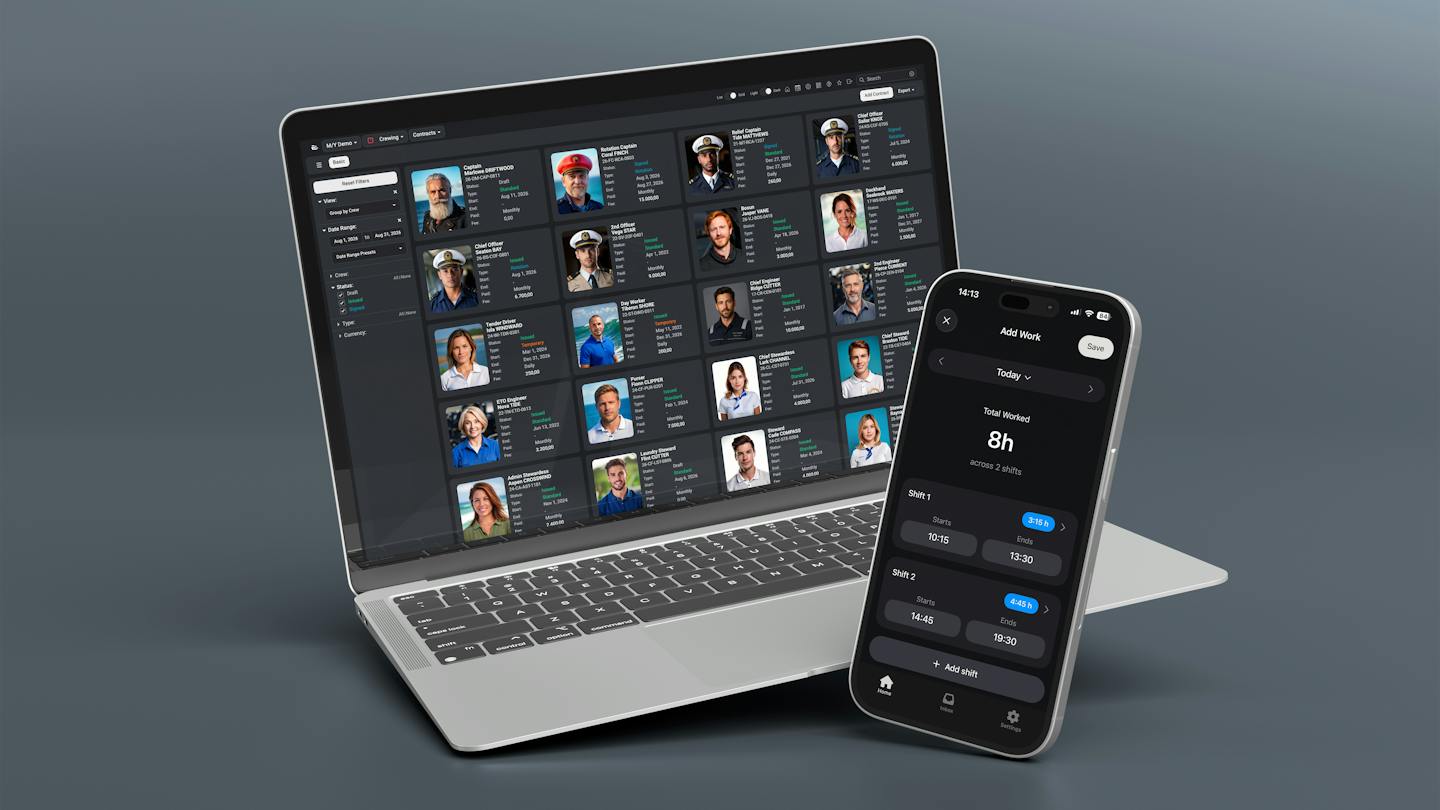
A significantly redesigned Crewing Package connects contracts, crew planning and payroll around the same crew record, while making day-to-day processes such as timesheets and Hours of Rest easier to manage.
Crew management is subject to constant change: employment terms are amended, rotations shift, leave is extended, allowances are added, and crew may join or leave partway through a month.
Each change may seem small, but when different parts of crew management are handled across disconnected tools, the same information often needs to be updated in several places. With a larger crew, keeping track of those changes becomes increasingly difficult, creating more room for omissions, discrepancies and oversights — particularly when operations are busiest.
Our new Crewing Package was designed to handle these real-life events as they happen.
Building significantly on DeepBlue’s previous HRM functionality, the redesigned package places Contracts, Planner and Payroll within one connected workflow. It builds on crew data already held in DeepBlue’s Basic Package, while completed payroll data can be imported into the Finance Package for accounting and budget tracking. Information recorded at one stage can be used where it is needed later, reducing duplicate work while giving captains, pursers and management a much clearer view of each crew member’s employment journey.
Contracts
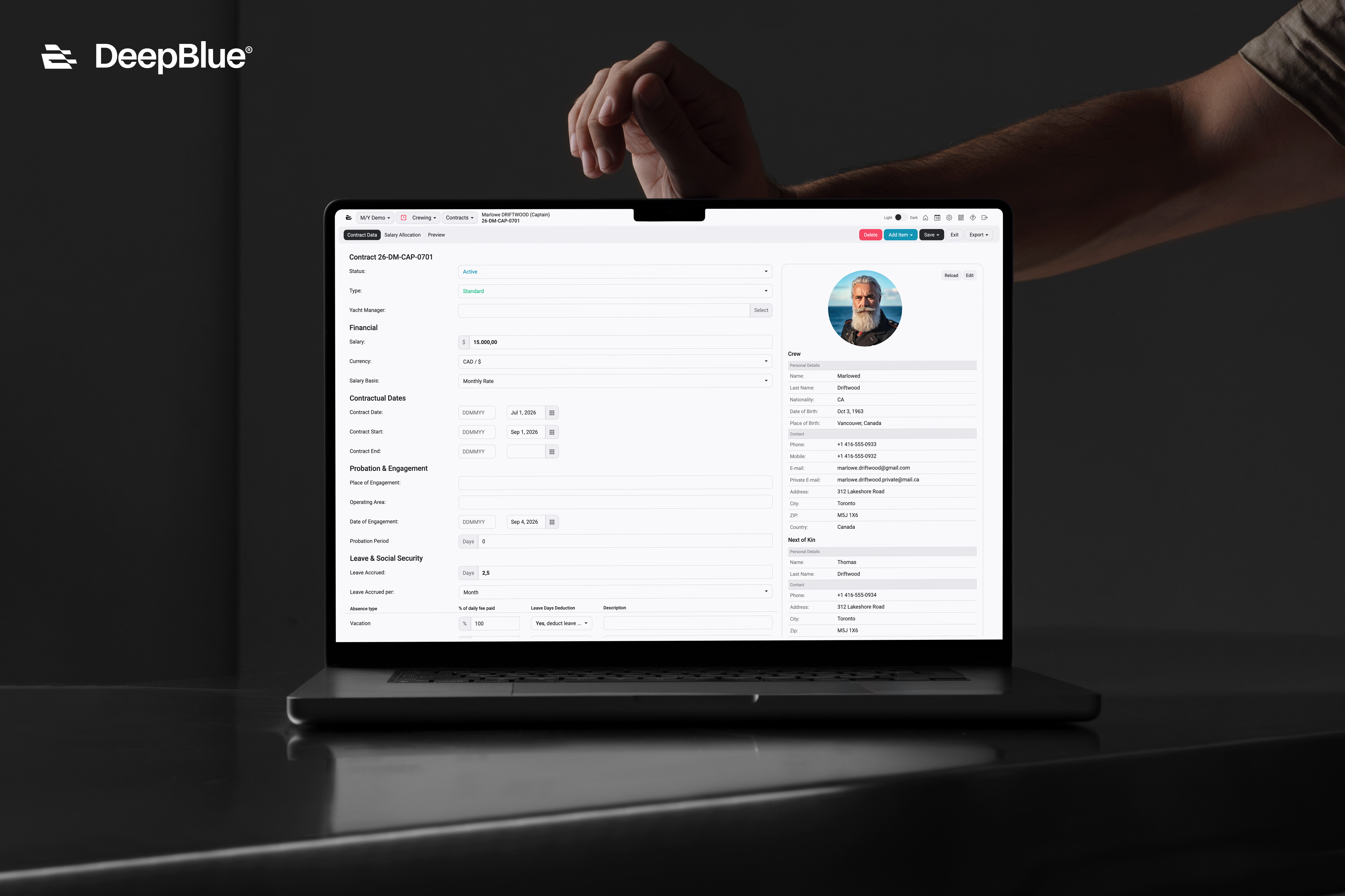
The workflow begins with the crew member’s contract.
The contract builds on the crew member data already maintained in the Basic Package, carrying the existing crew record into the employment workflow.
Employment terms including salary, currency, contract dates, leave entitlement and accrual, notice periods, rotation arrangements and additional allowances are maintained in one structured record. Contract documentation can then be generated from the same information for printing or electronic signature.
Rather than serving as a static point of reference, the contract becomes the active foundation for the crew member’s employment record in DeepBlue. The information established here is available to the processes that follow, including payroll.
This means that when employment conditions change, the underlying information can be updated where it belongs instead of being recreated independently elsewhere.
Previous contracts remain available in an archive, providing a historical record of each crew member’s employment terms over time.
Planner
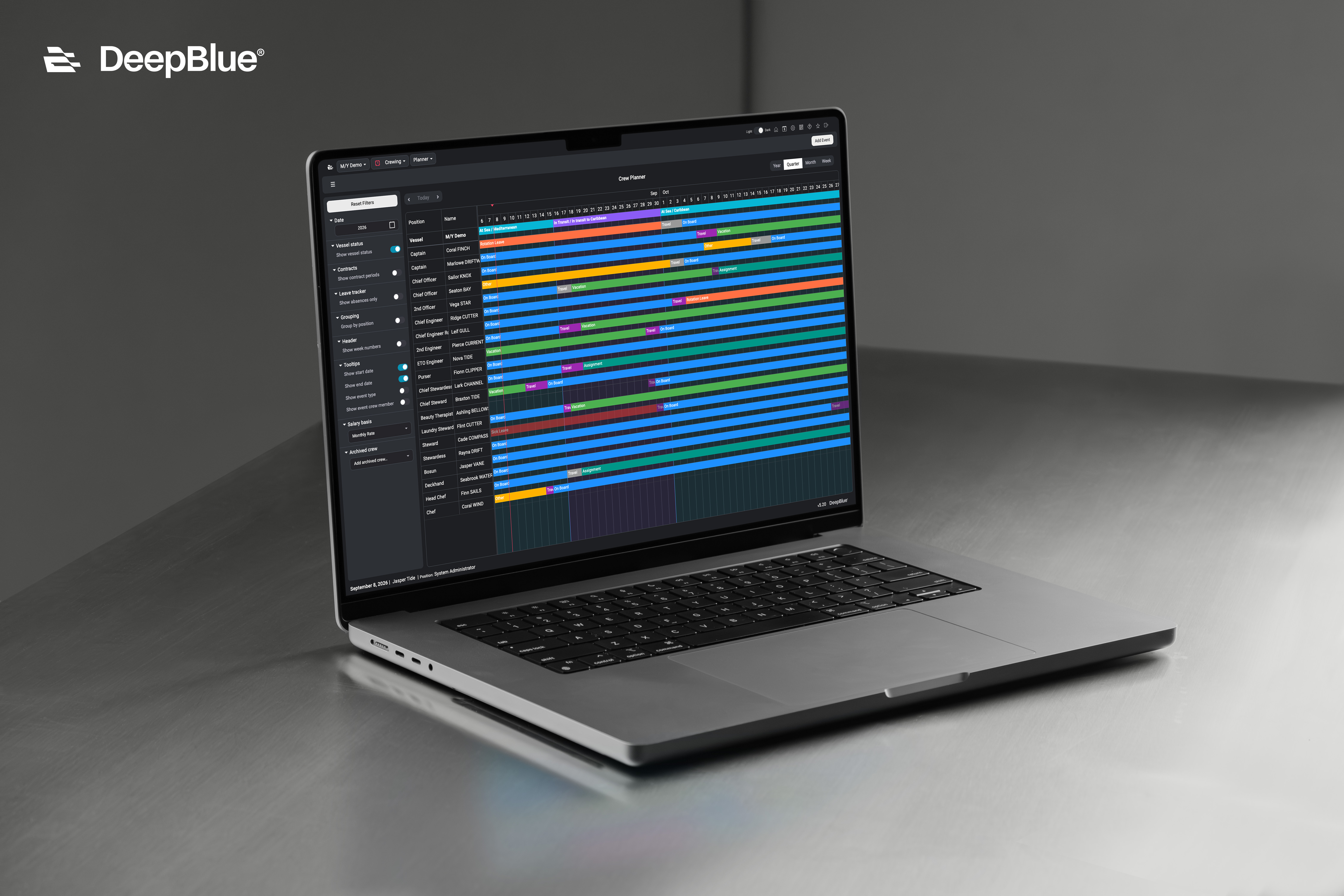
The Crew Planner provides a visual, vessel-wide overview of where each crew member is and what is coming next — whether they are on board, on leave, travelling, on assignment or otherwise unavailable. This gives every employed crew member a clear day-by-day status within the plan.
Rotations, absences and upcoming coverage can therefore be understood and managed at a glance, particularly when several crew movements overlap.
But these events are more than entries on a calendar.
Leave periods can record whether an absence is paid and whether leave continues to accrue, while relevant one-off allowances or deductions can be attached to individual events. Because the Planner is connected with Contracts and Payroll, information recorded as part of day-to-day crew planning can subsequently be reflected when remuneration is calculated.
The practical result is straightforward: changes are recorded when and where they happen, rather than reconstructed later when payroll is being prepared.
Payroll
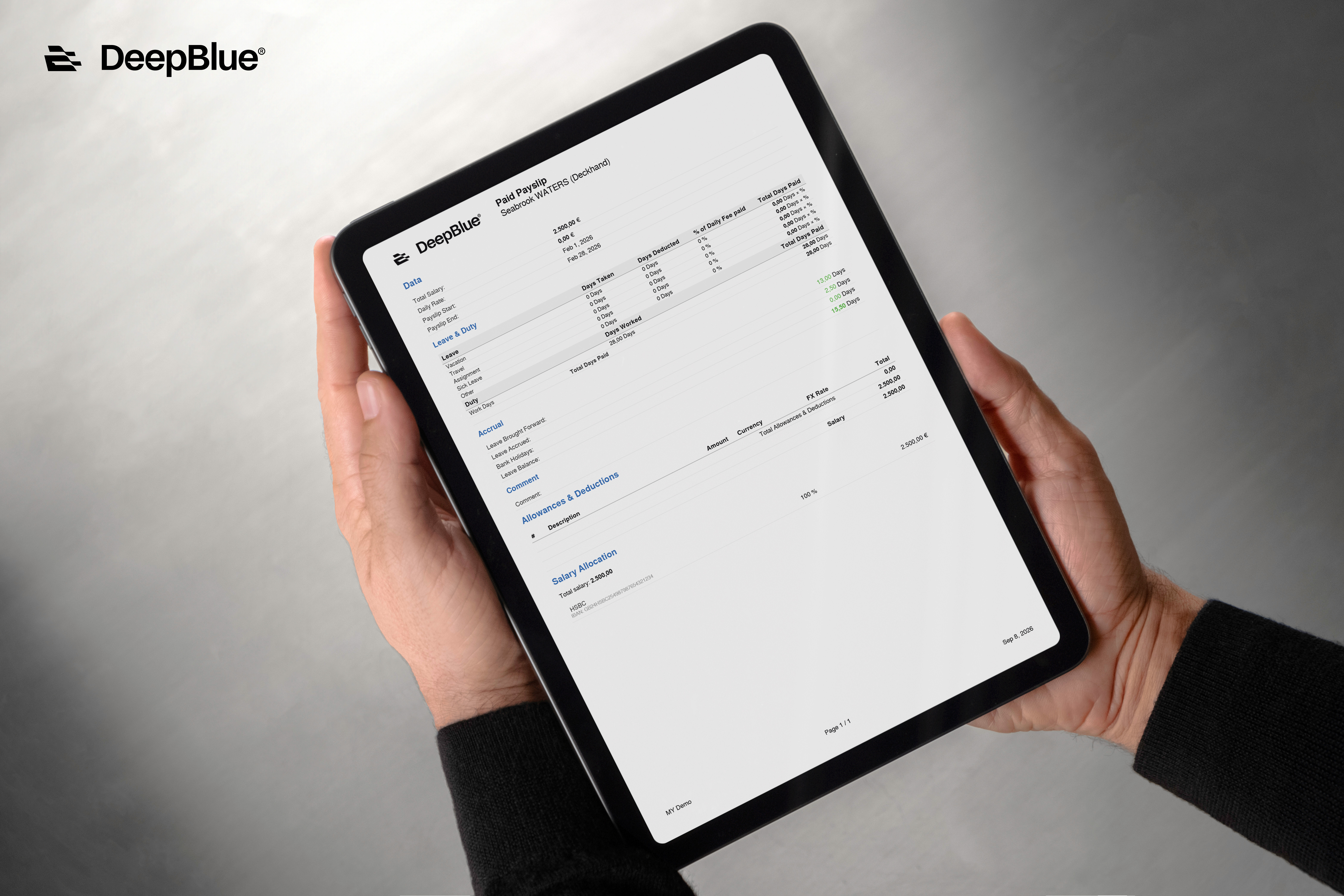
Payroll has been substantially redesigned around the information already maintained in Contracts and Planner. Both build on the underlying crew data held in the Basic Package.
Contractual terms provide the basis for remuneration, while leave, absences and relevant allowances or deductions recorded through the Planner are taken into account when payroll is prepared, for each individual payslip.
Importantly, payroll calculations can now automatically reflect employment changes during the month. If a crew member changes contract, salary or other employment conditions partway through a month, the calculation can account for those different periods rather than treating the entire month as though it followed one set of terms.
Leave balances are carried forward, allowances and deductions can be incorporated in different currencies, and salary allocations can follow the banking arrangements defined on the crew member’s page (part of the Basic Package) and confirmed in the crew member’s contract.
For larger crews, bulk actions also make it possible to move multiple payslips through the review and completion process together.
The improvement is not simply faster payroll preparation. It is less reconciliation before payroll can begin, because much of the information needed to calculate it has already been captured through the Basic Package, Contracts and Planner during the normal course of managing the crew.
Once payroll is prepared, the data can also be imported into the DeepBlue Finance Package, allowing payroll-related costs to become part of the wider financial workflow and further extending the benefits of an interconnected platform.
Timesheets & HOR
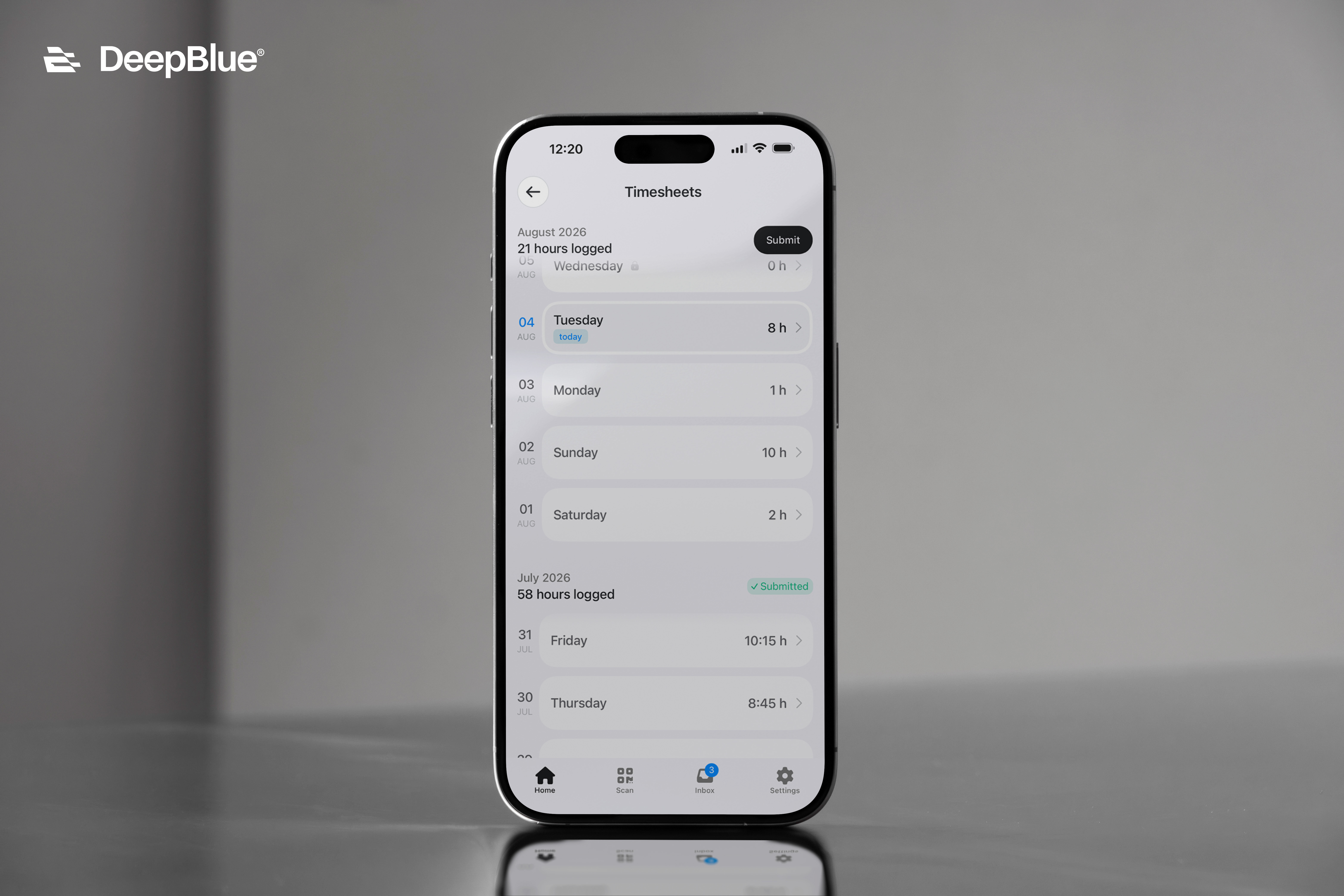
Timesheets remain the record of the hours crew actually worked, but completing them becomes considerably easier.
Where working hours have been scheduled in advance, predefined shifts can appear as the starting point in the crew member’s timesheet. Crew review the scheduled hours, confirm them where accurate or amend them where the day unfolded differently. This can also be done directly from a phone using the DeepBlue mobile app.
The timesheet therefore provides a clear comparison between the original schedule and the hours actually worked.
Confirmed working hours also form the basis of the Hours of Rest record, connecting day-to-day crew input with the wider compliance process.
Designed Around How Crewing Actually Works
The redesign grew directly from feedback from DeepBlue users and from the limitations of managing individual crewing processes separately.
In practice, each part of crew management affects the next. The crew record maintained in the Basic Package provides the common foundation. Employment terms influence pay, absences affect planning and remuneration, working schedules are assessed against MLC Hours of Rest requirements, and changes made at one stage can have consequences further down the line.
The new Crewing Package connects those relationships within the wider DeepBlue platform.
It does not remove the decisions involved in managing people. What changes is where and how those decisions are carried out. Key crewing processes now take place directly within DeepBlue as part of one connected digital workflow, with the relevant information carried from one stage to the next.
As a result, the need to repeatedly enter, check and reconcile the same information across different processes and platforms is greatly reduced — giving those responsible for crew management a clearer, more reliable way to manage the employment lifecycle from day to day.
The broader advantage is that Crewing does not operate in isolation: it builds on the same crew data held in the Basic Package and, once payroll is ready, connects into the Finance Package.
To learn more or schedule a demo, please contact dbsales@deepblue.app